Hotel El Roblar is shaped by the landscape and history of the Ojai Valley. Set beneath the Topatopa Mountains, the hotel sits among citrus orchards, chaparral-covered hillsides, open skies, and protected lands that include Los Padres National Forest, the Sespe Wilderness, the Matilija Wilderness, and the Ventura River watershed.
Local History
Valley of the moon
The Chumash
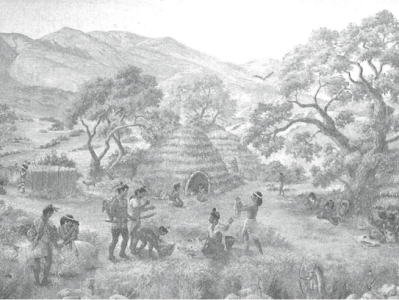
Long before the hotel was built, the valley was part of the homeland of the Chumash people, whose presence in the region dates back approximately 13,000 years.
The name “Ojai” is derived from the Chumash word ‘awha’y, meaning “moon.”
A Brief History
Agriculture
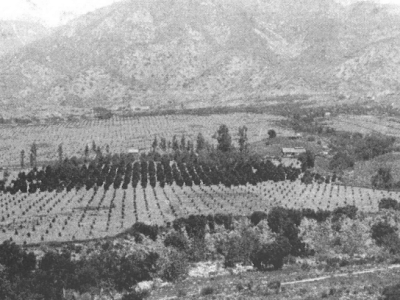
Ojai’s agricultural history is central to the valley’s character. Early settlers farmed olives, apricots, and almonds, while cattle ranching also shaped the landscape.
Over time, the valley became known for Mediterranean crops, citrus, avocados, and the Ojai Pixie tangerine, supported by generations of family-run farms.
Carrying History Forward
From the beginning, El Roblar was connected to Ojai’s identity as a place of retreat, offering guests access to the valley’s climate, mountain views, creek corridors, and seasonal landscape. Ojai’s distinctive east-west orientation gives the valley its celebrated evening light, when the Topatopa Mountains catch their pink glow at day’s end.
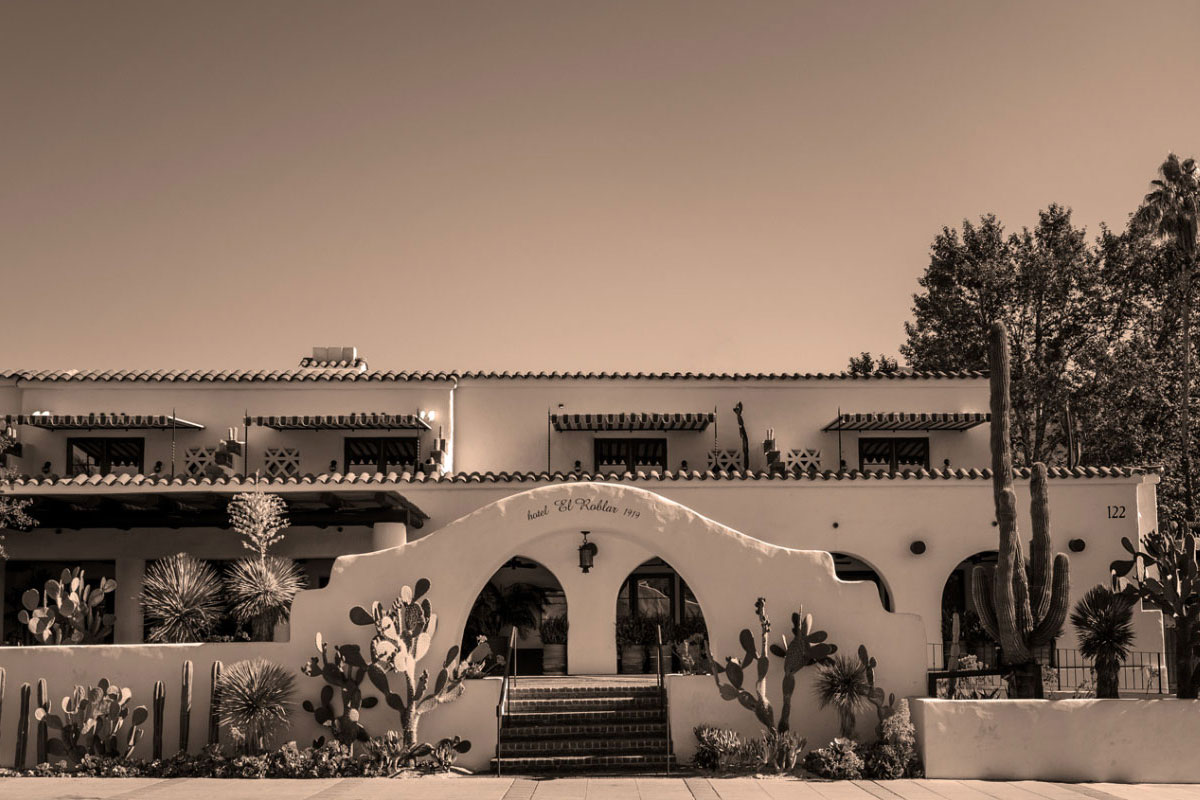
Edward Drummond Libbey, an Ohio glass manufacturer, first came to the Ojai Valley in 1908 and was captivated by the valley. Returning year after year, he helped shape Ojai’s architectural identity, working with architect Richard Requa on the mission-style arcade along Ojai Avenue. In 1918–1919, Hotel El Roblar was designed by Mead & Requa and built by Robert Winfield, becoming part of Libbey’s broader vision for Ojai as a place where architecture, landscape, and community worked together.
Today, Hotel El Roblar carries that history forward, rooted in the mountains, farms, protected lands, and cultural traditions that continue to define the Ojai Valley.